Grief Doesn't Follow a Script. Neither Should We.
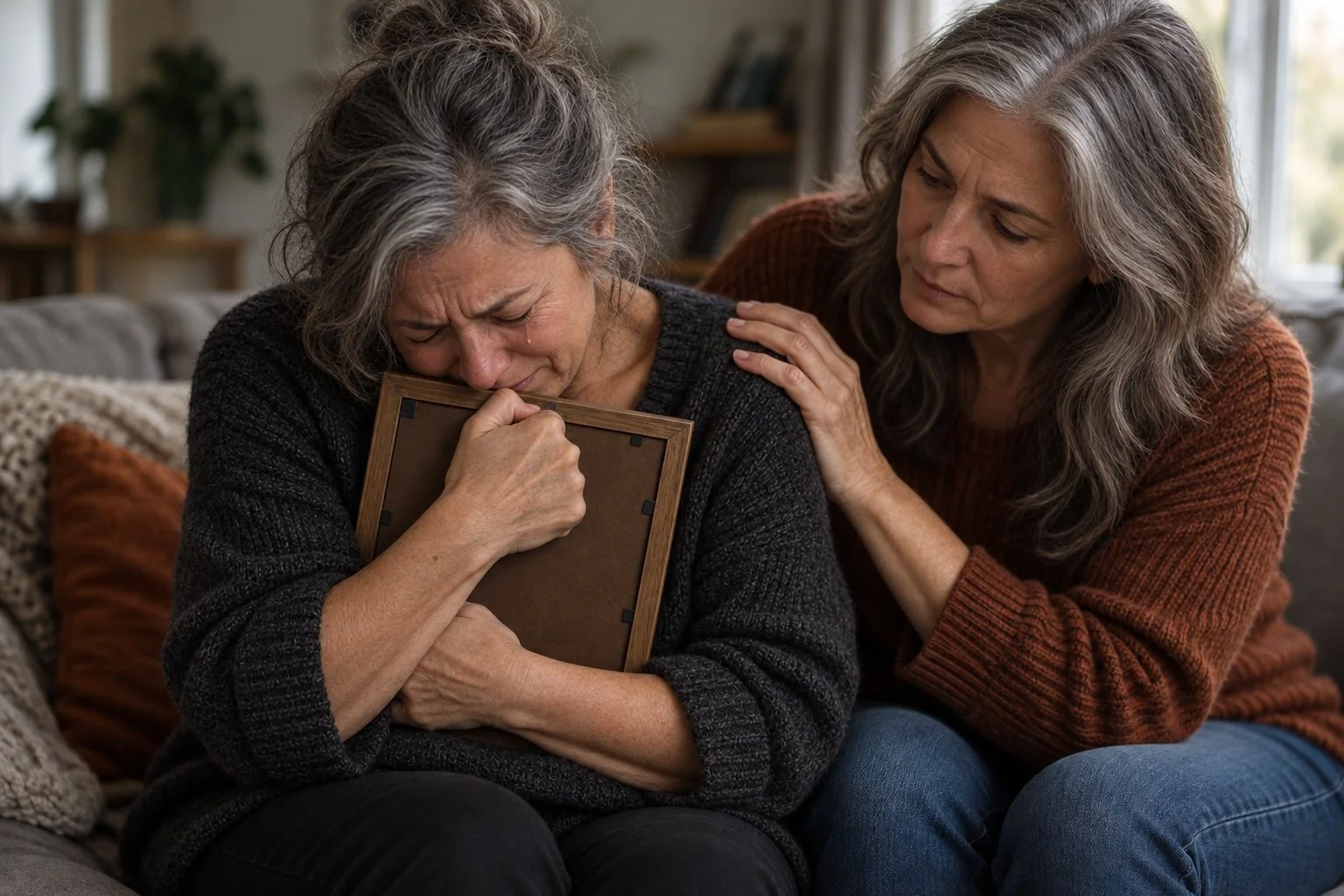
The things we say to grieving people—if we say anything at all—must depend on much more than good intentions.
People say some inappropriate things sometimes to those who are grieving. Oh, they mean well and their intentions are good. They want to comfort someone, ease their suffering, or offer a little encouragement in an otherwise miserable situation. Unfortunately, good intentions don't always produce good results.
We've all heard the familiar expressions. "He's in a better place." "Everything happens for a reason." "You need to be strong." "Time heals all wounds." Sometimes these statements bring genuine comfort. Most of the time, though, they are the last things a grieving person wants to hear.
The difficult thing for those trying to comfort someone is that there isn't a universally appropriate response to grief. What comforts one person may offend another, despite our good intentions. What sounds insensitive coming from a casual acquaintance might be deeply meaningful when spoken by someone who shares a long history with the person who is grieving.
I've spent considerable time studying grief, both academically and through my work as a hospice chaplain. One of the observations I made during my clinical pastoral education was that we can analyze grief, examine it, and scrutinize it, and still encounter a reaction we've never seen before.
It serves to remind me of something important about human suffering. Every person brings their unique story into the experience of loss, and we cannot expect everyone to respond according to our expectations of what should comfort them.
The Difference Between Knowing About Grief and Experiencing It
During one of my clinical pastoral education assignments, I was asked to reflect on a woman who understood grief from an academic and professional perspective. She knew the psychological theories, recognized the various responses people experience, and could explain the grieving process with considerable precision.
But when grief became personal, her knowledge did not necessarily prepare her for the emotional experience.
I found that instructive. We can become quite knowledgeable about something without fully appreciating what it means to experience it ourselves.
My first encounter with death, aside from pets, came when I was nine years old. My grandfather died suddenly of a massive heart attack in his kitchen. Only four days earlier, we had been playing catch together. I also lost friends in tragic accidents while growing up—one hit by a car, another electrocuted in a tree he’d been climbing, and a third died of an aggressive brain tumor when he was only eighteen. My father died when I was thirty-one. He was only fifty-five.
My Christian faith has profoundly influenced how I've understood those losses. I've always believed that God remains sovereign even when circumstances are painful or difficult to comprehend. That belief has provided me with a measure of peace and acceptance, although it certainly hasn't eliminated the sorrow associated with losing people I love.
But I recognize that my response is my own. Other people may have entirely different experiences, even when they share the same religious convictions and might not find the peace and acceptance I did in those same religious convictions.
That is why I am reluctant to prescribe how someone ought to grieve.
When "Time Heals" Is Exactly the Right Thing to Say
About twenty years after my father's death, a dear friend lost her father and asked me a question.
"How did you get through it?"
I told her that time had made a difference. The first year was especially difficult because of all the occasions when his absence became noticeable. Thanksgiving, Christmas, birthdays, and other familiar gatherings brought reminders that someone who had always been there was now missing.
But, as the years passed, the pain became easier to bear and the noticeable absence of my loved ones opened opportunities to remember them and talk about them in a way that was comforting. to me. The memories brought joy, rather than heartache. The sense of loss never entirely disappeared, but the intensity of it changed.
I told her that because it was true of my experience. I wasn't attempting to explain how everyone should grieve, and I wasn't suggesting she would necessarily experience the same progression.
She had asked me a personal question, and I gave her a personal answer.
Would I have walked into a funeral home and offered the same advice to a grieving stranger? Absolutely not.
The difference was our relationship.
My friend knew me, understood that I had experienced the loss of a parent, and specifically wanted to know how I had coped. There was an established relationship that provided the context for my response.
Without that relationship, the same words might have sounded dismissive or presumptuous.
We frequently overlook the importance of that when attempting to comfort others.
The Problem With Telling People How They Should Feel
One of my strongest objections to certain expressions of sympathy is that they can unintentionally invalidate what someone is experiencing.
When we tell grieving people they shouldn't be sad, that they need to move on, or that they ought to find comfort in some particular explanation, we may be asking them to adopt our preferred response rather than acknowledging their actual emotions.
And grief simply doesn't work that way.
Consider the difference between an unexpected death and a loss that has been anticipated for months.
A husband facing a terminal illness may tell his wife that he doesn't want her to spend the rest of her life grieving. He may encourage her to enjoy her remaining years, reminding her of their shared Christian faith and the hope of seeing one another again.
Within that relationship, those words may carry profound meaning. They are expressions of love between two people who have shared a life together and have likely discussed the approaching separation at considerable length.
Now imagine a casual acquaintance offering the same instructions shortly after the husband's death. Though the words might be nearly identical, their meaning could be entirely different. The relationship, the timing, and the circumstances determine whether the statement is appropriate.
Words of comfort are received differently depending on the circumstances surround the loss. Some deal with anticipatory grief, the pain and sorrow people experience while preparing for a loss they know is coming. Families may spend months acknowledging the approaching death, discussing their fears, and making preparations. Or they may not acknowledge it at all, hoping it’s all just a bad dream from which they will eventually wake up.
Others, still, face sudden and unexpected losses, with little opportunity to prepare themselves emotionally. We should not expect these individuals to respond in the same manner to our attempts at comfort.
The Importance of Hearing Someone's Story
My approach to chaplaincy has always placed considerable importance on understanding the individual before attempting to offer spiritual counsel.
I want to know something about the person sitting across from me. What has shaped their understanding of life? What do they believe? What relationships have influenced them? How are they interpreting the circumstances they now face?Grief doesn't occur in isolation from everything else a person has experienced.
A grieving husband may be struggling with loneliness after decades of marriage. A daughter may be wrestling with guilt over unresolved disagreements with her mother. Another person may find comfort in Christian promises concerning eternal life while simultaneously experiencing intense sorrow over the absence of someone deeply loved.
Those are different circumstances, involving different people and potentially very different spiritual needs. We cannot address them adequately by assuming that the same familiar expressions will be equally meaningful to everyone. And sometimes the most helpful response is an acknowledgment that someone is hurting. We can recognize their sorrow without attempting to explain it away, and we can allow them to decide how much they want to share.
There is nothing particularly complicated about that approach, although practicing it requires patience, genuine interest, and a willingness to listen.
Why I Explored This in The Chaplain's Chair
These questions about grief, relationships, and the importance of understanding the individual are among the reasons I wrote my novel, The Chaplain's Chair: Conversations at the Edge of Life.
Through Thomas Vale, an experienced hospice chaplain, I wanted to explore what happens when people facing serious illness and approaching death are given the opportunity to speak honestly about their circumstances.
Throughout the novel, Thomas encounters patients and families whose concerns are shaped by their personalities, histories, relationships, and beliefs. Some are struggling with unfinished conversations. Others face questions about faith, forgiveness, reconciliation, or what will happen to the people they leave behind.
Thomas doesn't approach every encounter with a predetermined explanation of what the person ought to be experiencing. He takes time to understand the individual, recognizing that the questions people bring to the end of life cannot always be answered through a standardized approach.
The novel is fiction, but the pastoral principles underlying these conversations come from my years of chaplaincy experience and theological study.
One of the themes I wanted readers to encounter is that meaningful care begins with understanding the person rather than assuming we already know what that person needs.
That principle is especially relevant to grief.
Perhaps We Should Be More Willing to Listen
People who are grieving don't necessarily need us to explain their loss, offer a philosophical interpretation of their suffering, or assure them that everything will eventually work out.
Sometimes they want to talk about the person they've lost. Sometimes they have questions about God, eternity, or the circumstances surrounding the death. Sometimes they want to remember happier occasions, and occasionally they may even find something to laugh about.
And sometimes they simply don't want to talk.
Our responsibility is not to force those conversations toward an outcome we consider appropriate. We should be willing to listen carefully enough to understand what the other person is actually expressing.
I remain convinced that Christian faith offers genuine hope in the face of death. The resurrection of Jesus Christ provides a foundation for that hope that extends beyond our immediate circumstances. But even among Christians who share that conviction, grief remains a profoundly personal experience.
Faith does not eliminate the pain of separation, and sorrow should not automatically be interpreted as a failure to trust God.
The Apostle Paul told the Thessalonian believers that they need not sorrow as those who have no hope (1 Thessalonians 4:13). He did not tell them they should not sorrow at all.
That exhortation deserves our attention.
When someone we care about is grieving, perhaps our first responsibility is to resist the temptation to reach for a familiar expression simply because we feel obligated to say something.
We can acknowledge their loss, respect their emotions, and allow the relationship to guide the conversation. Grief doesn't follow a script.
And neither should we.
About the Book
The Chaplain's Chair: Conversations at the Edge of Life is my Christian literary novel exploring faith, grief, forgiveness, reconciliation, and the conversations that become especially important when life is drawing to a close. Through the experiences of hospice chaplain Thomas Vale and the people he encounters, the story examines how honest conversation, biblical truth, and genuine human connection can bring meaning to life's most difficult moments.
Explore The Chaplain's Chair on Amazon
Tim Lajoie, BCC, is a board-certified Christian chaplain, author, and former law enforcement professional. His writing explores faith, human relationships, and the questions people confront during life's most challenging circumstances.
