Hospice Doesn't Help People Die. It Helps People Live.
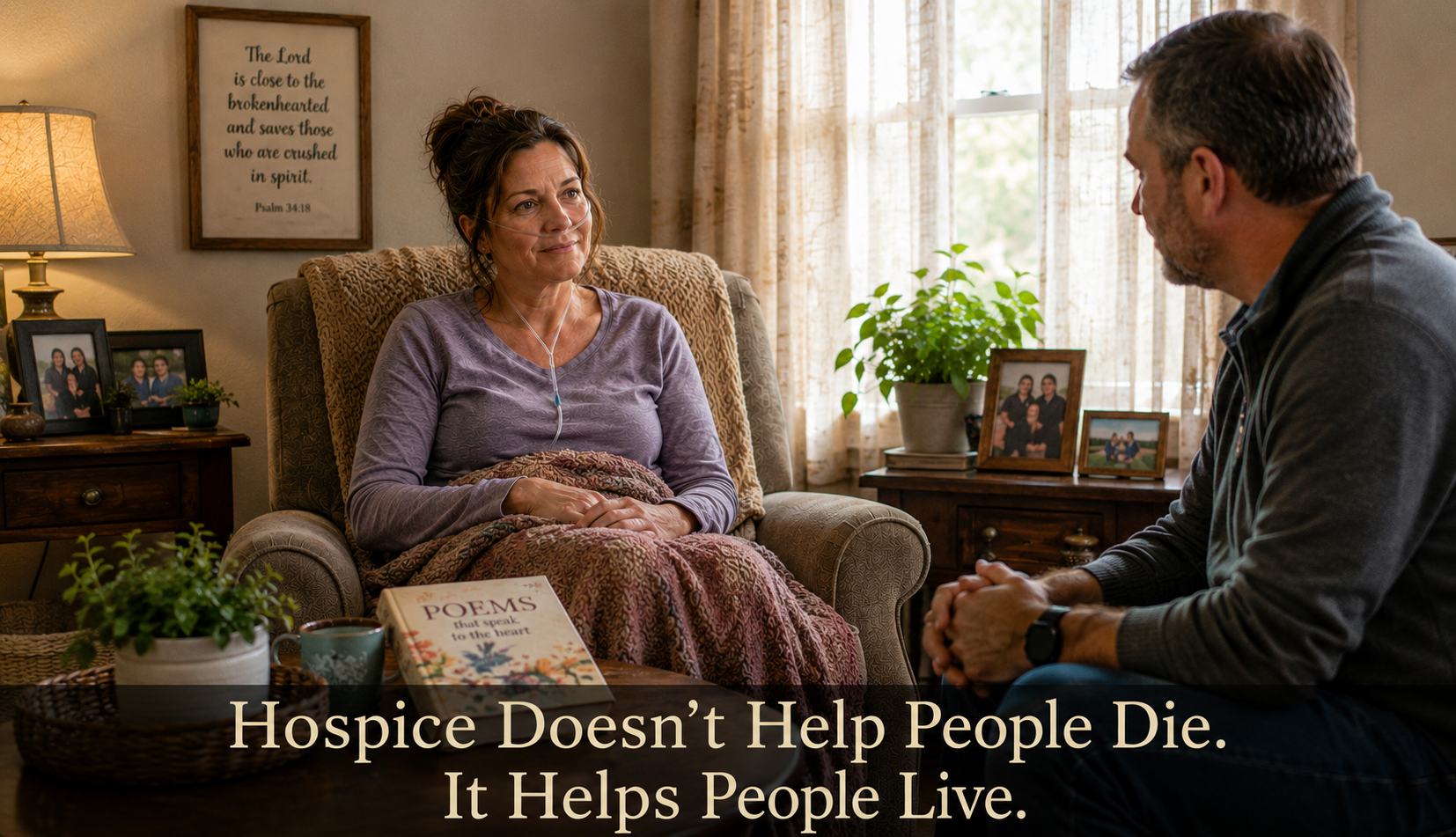
"It's where people go to die."
That's a response I sometimes get when I ask people if they know what it means to 'go on hospice.'
And that answer misses the heart of hospice care. By a lot.
Hospice certainly recognizes that death is approaching. It does not pretend otherwise. There comes a point in many illnesses when medicine can no longer offer a cure. Treatments become increasingly burdensome while providing fewer benefits. At that point, a different question becomes more important: How can this person live as well as possible for whatever time remains?
That is where hospice begins.
I sat with a hospice patient who had spent several years fighting chronic illness. Her calendar had become a revolving door of specialists, medications, laboratory work, and appointments. Every month seemed to bring another prescription, another test, another treatment, and another disappointment. She described what that life had become: constant stress, constant uncertainty, and the feeling that her entire existence revolved around trying to stay one step ahead of another medical crisis. It was stealing all the joy from her life, however much she had left.
Then she entered hospice.
What surprised her most was not that she felt physically better. She freely admitted that her disease had not changed. She still became short of breath. She still required oxygen. She still lived with the limitations of serious illness.
What changed was something else entirely.
The endless pressure in her life lifted.
She no longer woke every morning wondering which doctor's office she needed to visit. She no longer measured her week by appointments, medication changes, and waiting for another phone call about another test result. Instead, she discovered something she had not experienced in a long time: peace.
She told me she had become happier after entering hospice. Many people would find that statement surprising. How could someone become happier after being told there was no cure?
The answer is that hospice shifted the goal. Rather than asking, "How can we cure this disease?" hospice asks, "How can we help you live well today?"
Those are very different questions. Hospice does not surrender hope. It simply relocates hope.
Hope is no longer found in another scan or another medication. Hope is found in comfort. In meaningful conversations. In relationships. In sleeping through the night. In spending time with family. In reading another chapter of a favorite book. In laughing. In remembering. In making peace with unfinished matters. In living intentionally rather than merely existing between medical appointments.
During our conversation, the patient reflected on how much emotional weight had disappeared. The stress that had dominated her life began to fade. Even her family noticed the difference. Hospice had not removed her illness, but it had removed much of the burden that illness had placed upon every waking day.
That experience reminds me of an often-overlooked biblical proverb:
"A merry heart doeth good like a medicine..." (Proverbs 17:22, KJV)
Scripture is not suggesting that happiness cures disease. Rather, it reminds us that our inner life affects the way we experience our outer circumstances. Peace, joy, hope, gratitude, and love become powerful gifts, even when a cure is no longer possible.
That is one of hospice's greatest contributions.
As a chaplain, I have watched patients rediscover conversations with family that had been postponed for years. I have seen husbands and wives simply enjoy sitting together without rushing to another appointment. I have watched people revisit cherished memories, laugh over old photographs, and spend their remaining days doing things that remind them they are still living.
Hospice creates space for those moments.
That is why I often tell people that hospice is not about helping people die. It is about helping people live.
Death will come in its time. If you believe in divine providence, you know it comes at its appointed time, and no doctor or treatment can change that.
Until then, there are stories to tell, forgiveness to extend, relationships to strengthen, prayers to offer, sunsets to watch, grandchildren to hug, hymns to sing, and memories to leave behind.
Those things are not interruptions to the dying process. They are the very essence of living. When hospice is understood that way, it ceases to be a symbol of defeat.
Instead, it becomes a ministry that gently reminds people that every remaining day still possesses immeasurable value.
Helping people live until they die has always been one of hospice's greatest callings.
