“Why Are My Boys Dead?”
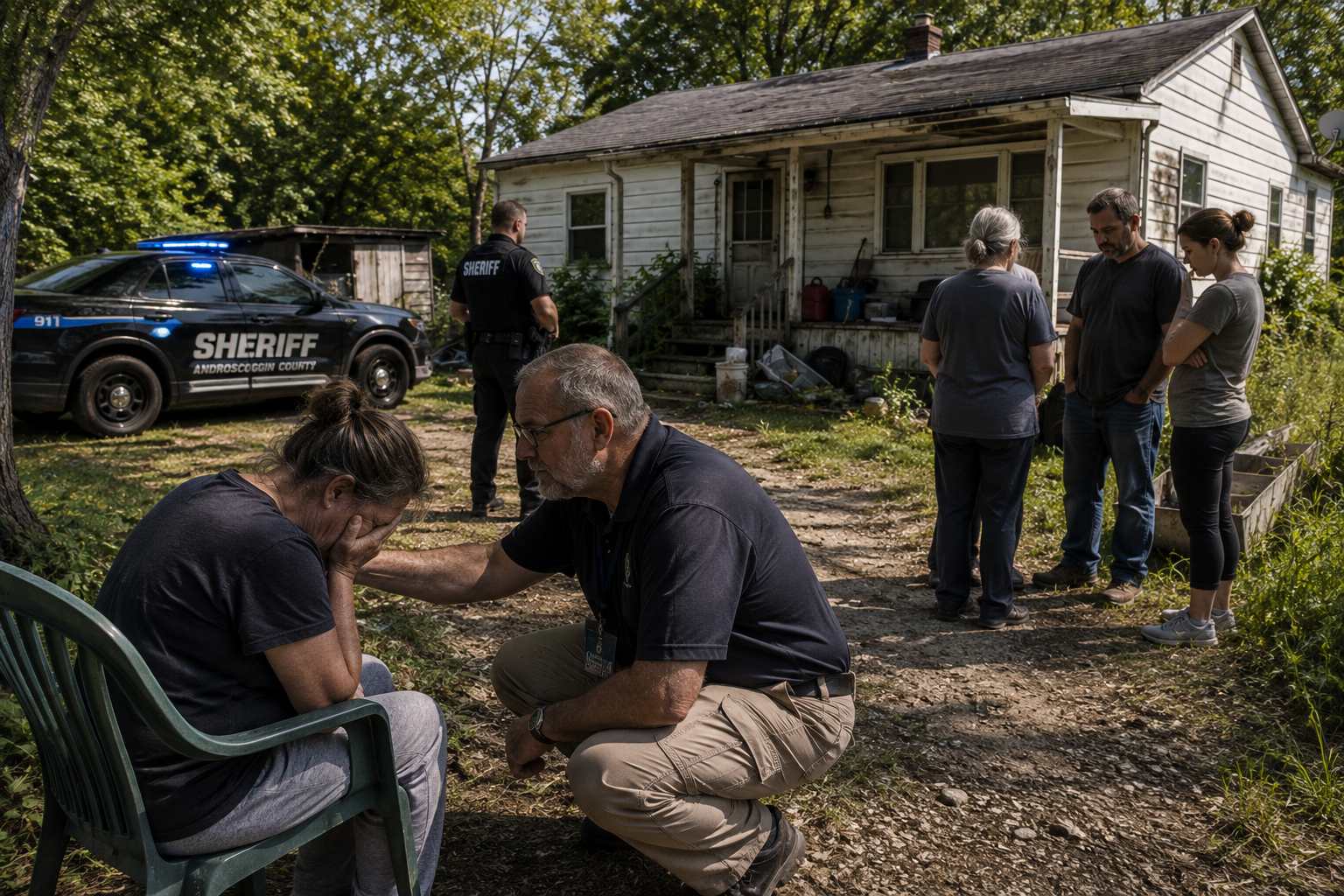
A few years ago a call came on a Saturday morning while I was at home. At the time I was serving as a chaplain for our county sheriff's department. Dispatch advised me that deputies were investigating an apparent overdose death and that the deceased man's mother was extremely distraught. A local pastor had been called but was unavailable, so they wanted to know if I could respond.
As I got dressed, dispatch continued to update me. The address was familiar to local law enforcement. The property had been flagged because of hazardous conditions, and the homeowner had a long history of mental health struggles that frequently brought deputies to the residence. Then the dispatcher shared another detail.
The deceased was thirty-four years old. His mother had discovered his body behind the house. One year earlier she had discovered another son dead from suicide in the garage.
I remember sitting quietly for a moment after hearing that.
Chaplains often arrive after tragedy has already unfolded. We step into situations already saturated with grief, confusion, anger, and unanswered questions. But some calls feel heavier than others. This was one of them.
As I drove toward the address, I found myself thinking about my years in the Coast Guard. Search-and-rescue missions often began with incomplete information. The alarm sounded, a crew assembled, and everyone moved quickly toward a situation they only partially understood. At some point preparation ended and response began. You simply went because someone needed help.
That morning felt much the same.
When I arrived, the scene was quieter than I expected. The house sat surrounded by overgrown grass, discarded items, and years of accumulated neglect. Several family members stood together speaking softly. The body remained behind the residence awaiting release by the medical examiner.
A patrol sergeant met me near his cruiser.
"How are you holding up?" I asked.
He shook his head and gave a tired smile.
"This is my second overdose today. At least the first one lived."
Then he added, "I'm retiring this fall. This stuff gets old."
I knew exactly what he meant. When many of us entered law enforcement, overdose calls were relatively uncommon. Over time they became routine. What never became routine was the grief left behind.
Before I walked away, the sergeant pointed toward a woman sitting alone in a lawn chair.
"That's the mother," he said. Then he lowered his voice. "Her family has been trying to help her for a long time, but she doesn't trust them."
I introduced myself and barely had time to finish my name before she stood, grabbed my hand, and collapsed into my shoulder. Her grief poured out immediately. She cried so hard that words became difficult to understand. I put my arm around her shoulders and simply stayed there while she wept.
There are moments when chaplains discover that presence matters more than answers. This was one of those moments.
Eventually she sat back down and began telling me about her sons.
"He was a good boy," she said. "He didn't deserve this."
As she talked, guilt surfaced repeatedly. She wondered what she should have done differently. She revisited old decisions and painful memories. Like many grieving parents, she searched for reasons and found only more questions.
Then she said, "He'd been reading the Bible. We were reading it together."
The conversation turned toward faith. She told me she prayed often but struggled to understand why God seemed silent.
"I prayed for both my boys," she said. "Now they're both gone."
After a long pause she looked directly at me.
"Why are my boys dead?"
Some questions deserve honesty more than certainty.
"I don't know," I told her. "I wish I did."
I have learned that many people assume chaplains possess answers to life's hardest questions. We don't. We carry the same unanswered questions everyone else carries. Faith does not eliminate mystery. Sometimes it simply allows us to continue walking through it.
We talked for quite a while. She spoke about God, suffering, loss, and loneliness. More than once she returned to the same question in different forms, trying to make sense of something that simply refused to make sense.
At one point she asked why she was still alive when her sons were gone.
The only answer I could offer was, "Maybe God still has something for you to do."
Not long afterward she went inside to gather a few belongings. Family members had arranged for her to stay elsewhere for several days. While she packed, her mother and sister approached me.
What they shared revealed a second tragedy unfolding alongside the first.
Both women loved her deeply. Both had spent years trying to help. They spoke about her mental illness, her isolation, and her refusal to accept support. Again and again they returned to the same painful reality.
"She doesn't believe us."
One of them looked at me and said, "All we want her to know is that we love her."
I listened as they described years of strained relationships, failed attempts to help, and the frustration of watching someone they loved push them away. Their grief was different from the mother's grief, but it was grief nonetheless.
Then came a question I was wholly unprepared to answer.
"Can you convince her?"
I remember thinking that I had come to comfort a grieving mother. Now I was being asked to help repair a family fractured by years of pain and mistrust.
The funeral home arrived a short time later. Family members were moved inside while arrangements were made. Eventually the mother emerged carrying a duffel bag. She was preparing to leave with her family.
Before she left, I asked whether everyone would be willing to pray together.
They agreed.
Then I turned to her and asked a question.
"Do you trust me?"
She nodded.
"Yes."
I looked toward her mother and sister.
"Then let me tell you something. These women love you. They've been trying to help you. You don't have to carry this alone."
For several seconds nobody spoke.
Then all three women began to cry.
Years of grief, frustration, love, fear, and misunderstanding seemed to surface at once. They embraced one another while I stood nearby, grateful simply to witness the moment.
We prayed together before they left.
I never saw them again.
I do not know what happened after that day. I do not know whether relationships were restored, whether treatment was accepted, or whether lasting reconciliation occurred. Some stories allow us to see the ending. Others do not.
What I remember is a grieving mother who trusted a stranger long enough to hear the people who loved her.
Looking back, that may have been the most important thing that happened that day. Before help can be accepted, before reconciliation becomes possible, before healing can begin, trust must exist somewhere. For a brief moment in a yard overshadowed by death and heartbreak, it did.
And that was enough.
